You paid for
the sunlight.
Go and get it.
A solar array is the one thing on your roof with a measurable output — and the one thing most people never touch after installation day. Dust and birds take a bite out of it every single month.
Service 01
Solar Panel Cleaning
Deionised water, soft brushes, no detergents and no pressure washer anywhere near your panels.
Soiling is gradual, which is exactly why it goes unnoticed. A film of dust, pollen and pollution builds evenly across the glass, output drifts down a few percent at a time, and nobody suspects anything because there was never a bad day to point at.
This stretch of coast is harder on panels than most of the country. Haul-road and mine dust drifts across the Upper Hunter around Singleton and Muswellbrook. Vineyard soil lifts through Pokolbin every dry spell. From Newcastle out through Port Stephens and down the Central Coast you get salt haze that bonds dust onto the glass. Then a light shower turns the whole lot into a set-in film instead of washing it off.
I clean with deionised water so nothing is left behind when it dries — no mineral spotting, no soap residue for the next lot of dust to stick to.
Why it matters
Every percent of output you lose is a percent of a system you already paid for. Cleaning is the cheapest possible way to raise generation — no new hardware, no re-approval, no inverter work. It also means when output does drop for a real reason, you notice, instead of blaming the dirt.
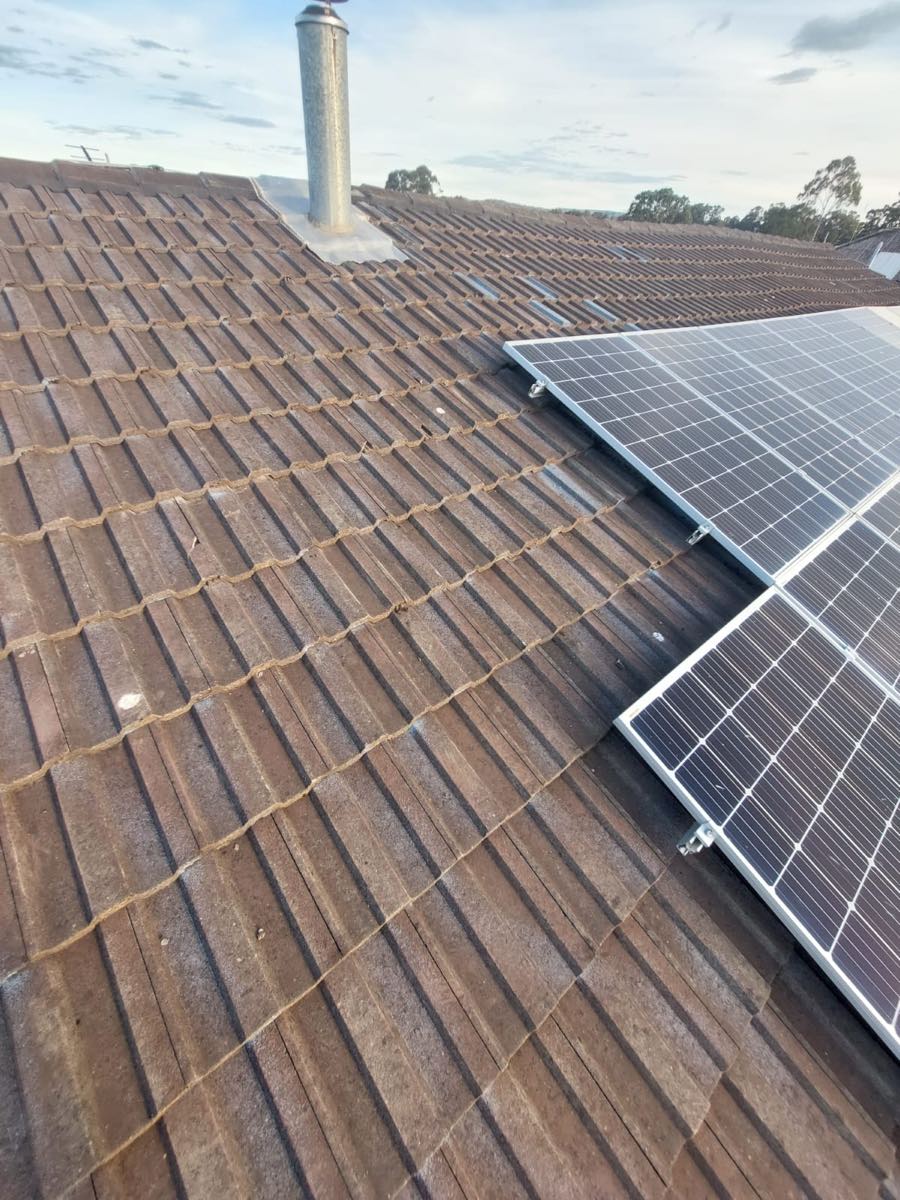
How I clean
- Deionised, filtered water — no detergents, no residue, no streaking
- Soft-bristle brushes on a fed pole; nothing abrasive touches the anti-reflective coating
- No high-pressure washing — pressure drives water past panel seals and voids warranties
- Frames and drainage channels cleared so water doesn’t pool and stain
- Visual check of mounting rails, clamps, cable ties and any exposed DC wiring
- Before and after photos, plus a note of anything your installer should look at
How often?
Every 12 months — most homes
Suburban block, moderate tree cover, no heavy industry nearby.
Every 6 months — Upper Hunter
Singleton, Muswellbrook and anywhere downwind of haul roads, quarries or unsealed roads.
Every 6 months — rural and coastal
Paddock and harvest dust, or salt haze anywhere along the coast from Port Stephens down through Newcastle and the Central Coast.
Straight away — bird activity
Droppings on glass are corrosive and create hot spots. They don’t wash off with rain.
Service 02
Bird Proofing
The gap under your panels is a dry, warm, predator-free cavity about 15cm high. Pigeons think it was built for them.
Once a pair moves in under the array, the problem compounds fast. Nesting material packs the cavity and traps heat against the back of the panels. Panels run hotter, and hot panels produce less — output falls away in exactly the conditions where you should be generating most.
Then it gets worse. Droppings build on the roof sheet and in the gutter below, blocking drainage and eating into the coating. Birds strip insulation from DC cabling and chew cable ties until wiring sags onto the roof. Mites and lice come with the nest and don’t stay on the roof. And the noise starts at first light.
Why it matters
Bird proofing protects three things at once: your generation figures, your roof and gutters from corrosive fouling, and your wiring from becoming a genuine fire and shock risk. It is a one-visit job that stops a problem which otherwise never stops on its own.
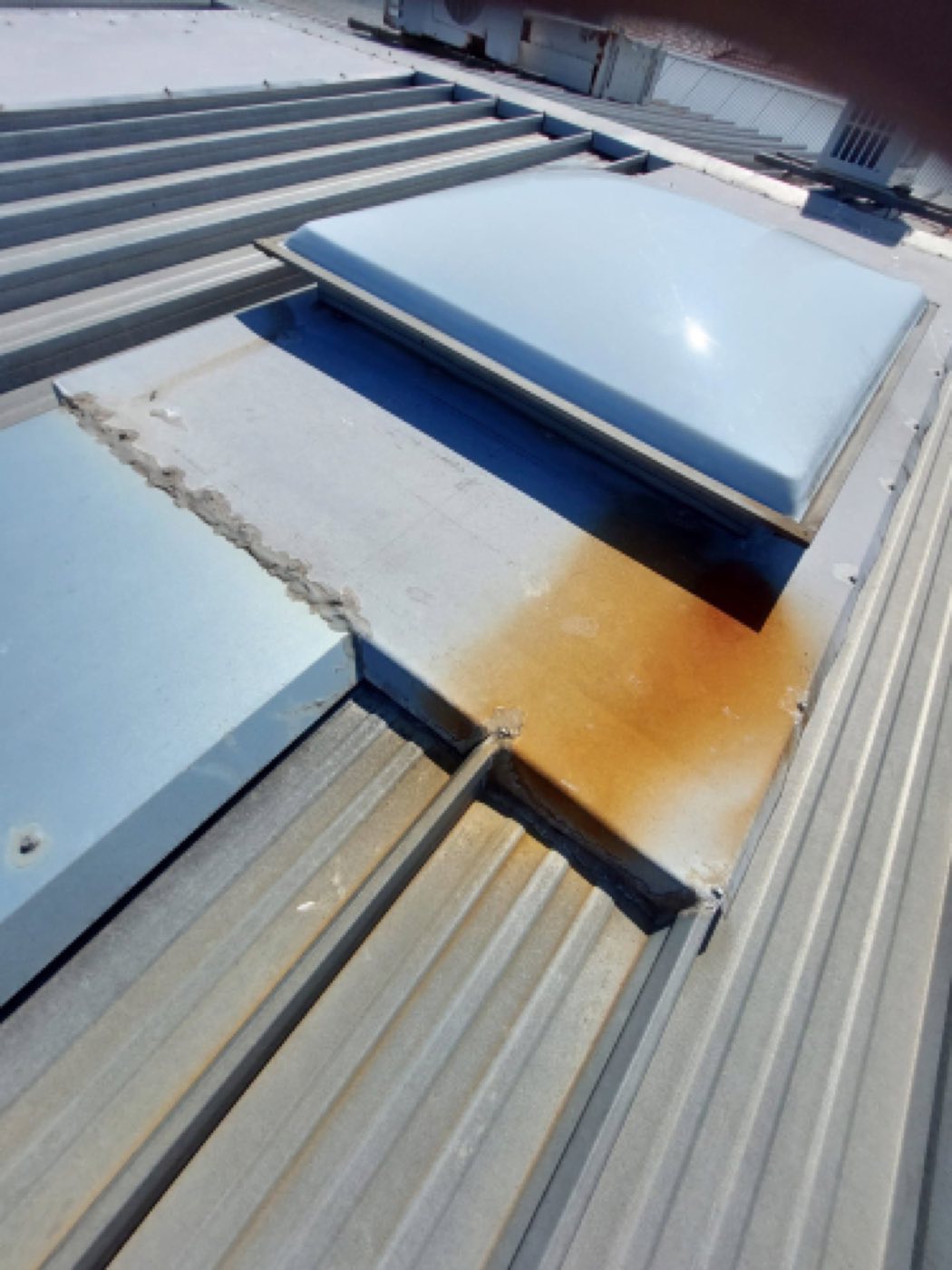
What the job involves
Clear the cavity
Nests, feathers, droppings and debris cleared out from under the full array.
Sanitise and wash down
Affected roof area, panel frames and gutter run treated and rinsed clean.
Fit the mesh skirt
Powder-coated galvanised mesh clipped to the panel frame — no drilling into panels, no screws into your roof sheet, nothing that touches your warranty.
Check the wiring
Cable ties replaced, DC runs re-secured, any chewed insulation flagged for your electrician with photos.
Signs you already have tenants
- Scratching, cooing or flapping overhead first thing in the morning
- Twigs, straw or feathers in the gutter below the array
- White staining down the roof sheet or fascia under the panels
- Birds repeatedly landing on the same edge of the roof and disappearing
- Generation lower than the same month last year with no other explanation
- Insects or mites appearing in the ceiling space or upstairs rooms
One visit, both jobs
Clean it, then keep them out
Cleaning an array that birds still live under is money down the drain. I do both in the same visit — clear and sanitise the cavity, mesh the perimeter, then clean the glass properly on the way out.
If you’re booking a gutter clean as well, say so. Same roof, same setup, one price — and I only walk your tiles once.
Free Quote
Output down and no idea why?
Nine times out of ten it’s dust, droppings or something nesting under the array — not your inverter. I'll get up there, tell you which it is, and you can decide from there.